
Checker Tools
Text Tools
- Text separator
- Email extractor
- URL extractor
- Text size calculator
- Duplicate lines remover
- Text to speech
- IDN Punnycode converter
- Case converter
- Character counter
- List randomizer
- Reverse words
- Reverse letters
- Emojis remover
- Reverse list
- List alphabetizer
- Upside down text generator
- Old English text generator
- Cursive text generator
Developer Tools
Generator Tools
Image manipulation tools
- BMP to ICO
- ICO to JPG
- ICO to GIF
- ICO to PNG
- ICO to WEBP
- ICO to BMP
- GIF to JPG
- GIF to ICO
- GIF to PNG
- GIF to WEBP
- GIF to BMP
- HEIC to PNG
- HEIC to GIF
- HEIC to JPG
Instant Nibbles to Bytes Converter Tool
Nibbles to Bytes
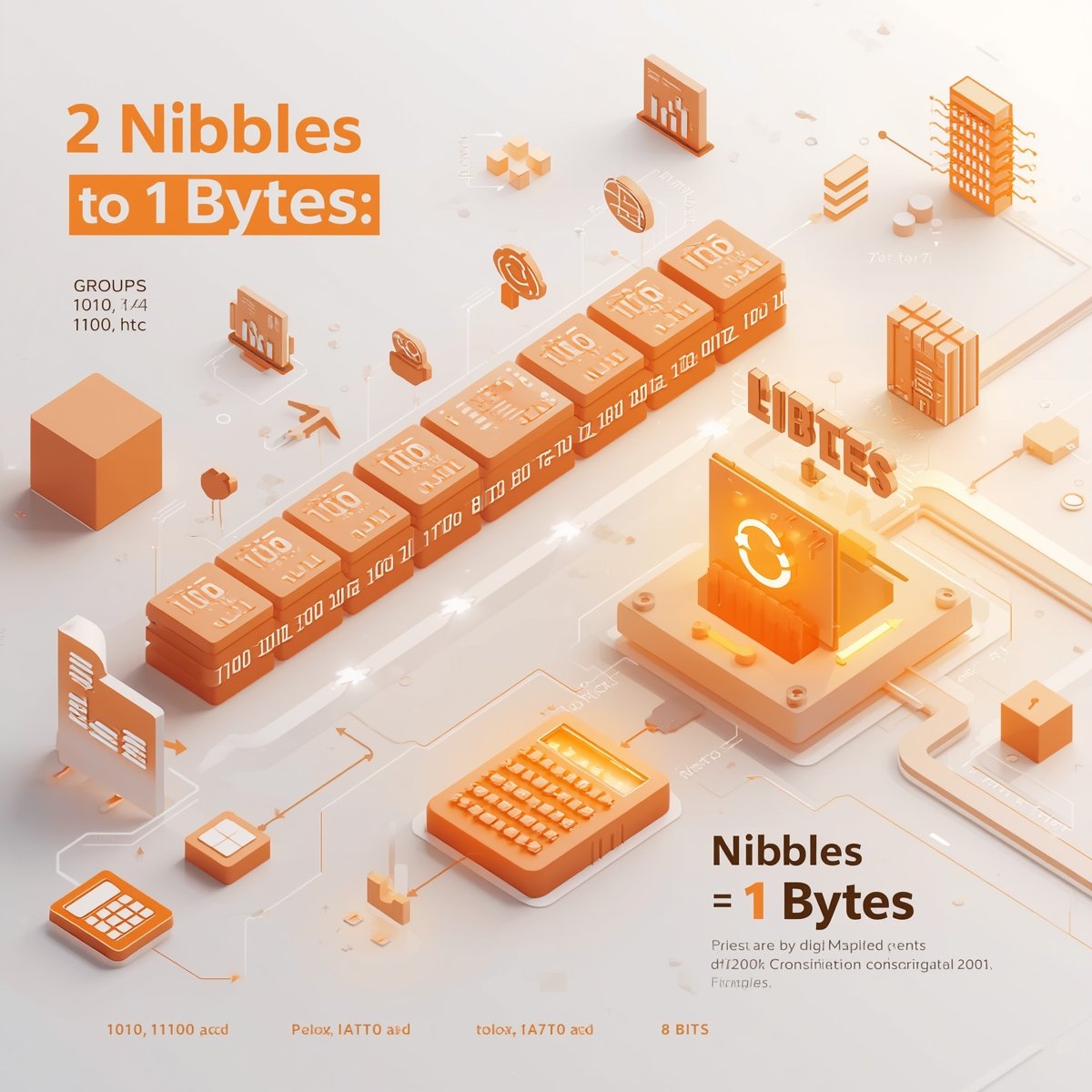
The concept of nibbles, bits, and bytes are important in the digital computing and data storage segment of the world. In any computing system, these units form part of the basis of measurement and processing of data. This paper will deal with the number of bits comprising a nibble and nibble correlation with bytes and logic of conversions between notorious three basic units of data. Are you thinking how many bits is a nibble or how many nibbles to a byte? Keep reading to find out what it all means.
What Is a Nibble?
A nibble is four bits in an aggregation, or one-half an octet. It is a single hexadecimal digit (0 F), and is most commonly used in digital electronics and due to the common use of base-16 (hex) numeral system in software programming.
🧠 Key Facts About Nibbles:
- A nibble = 4 bits
- Two nibbles = 1 byte
- A nibble can represent values from 0 to 15
This means that if you’re asked how many bits in a nibble, the simple answer is 4. So whether you’re writing code or studying computer architecture, understanding the nibble bits concept is foundational.
Bits, Bytes, and Nibbles: How Are They Connected?
What is a Bit?
A bit (short for binary digit) is the most basic unit of data in computing, and it can hold a value of either 0 or 1.
What is a Byte?
A byte consists of 8 bits. It is the standard unit used to encode a single character of text in a computer. Knowing the byte structure is essential when calculating file sizes, memory allocation, or network bandwidth.
What is a Nibble?
As previously mentioned, a nibble is 4 bits, or half a byte. It’s frequently used when dealing with binary-coded decimal (BCD) and hexadecimal values.
How Many Bits Are in a Nibble?
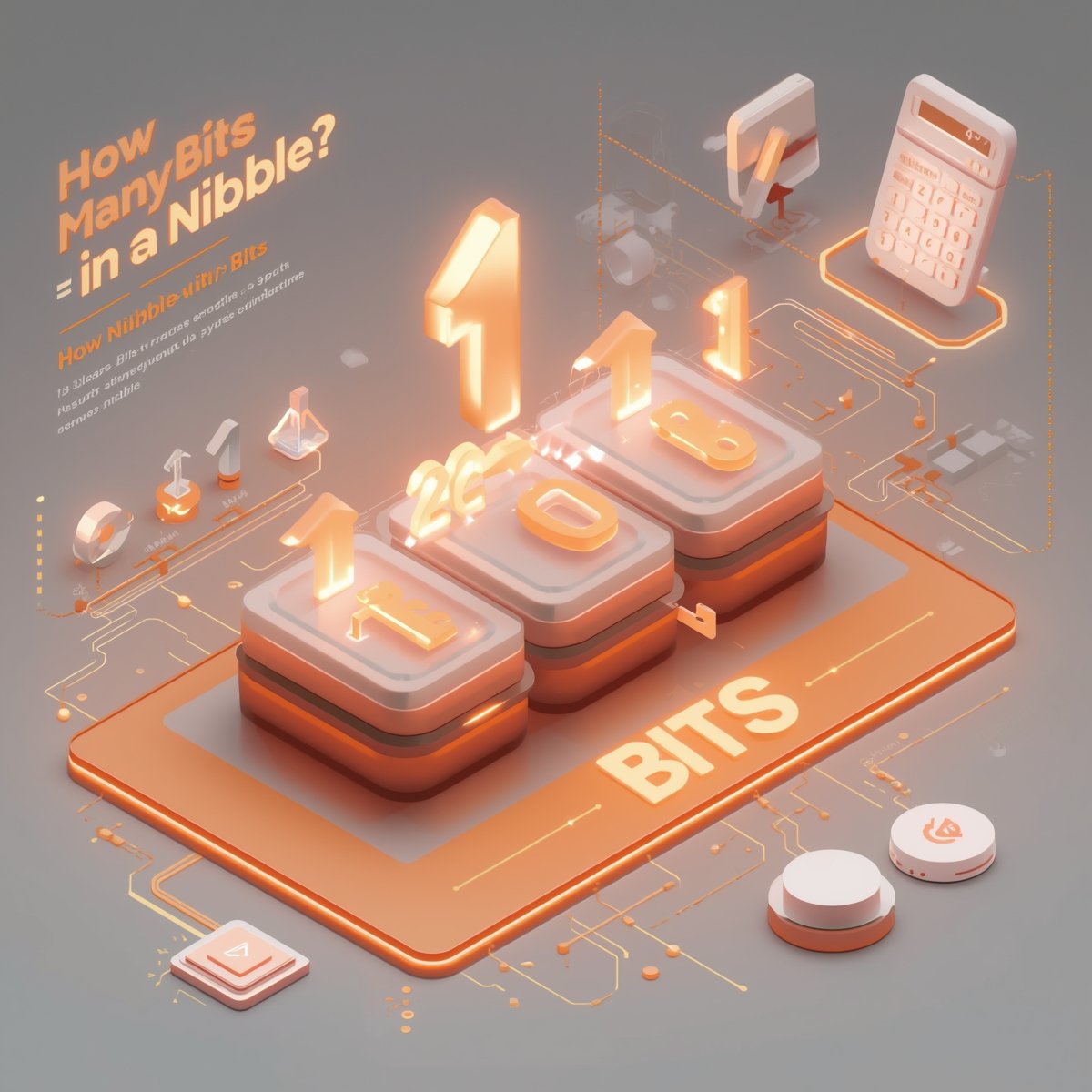
If you’re wondering how many bits are in a nibble, the answer is straightforward: 4 bits. This is a constant definition and applies universally across all modern computing systems.
You might also come across phrasing like:
- How many bits is a nibble?
- Bits in a nibble
- Nibble bits
All of these are asking the same question and the answer remains: 4 bits per nibble.
How Many Nibbles Are in a Byte?
A byte contains 8 bits, and since a nibble is 4 bits, there are exactly 2 nibbles in a byte.
Unit | Bits |
1 Bit | 1 |
1 Nibble | 4 |
1 Byte | 8 |
1 Byte | 2 Nibbles |
So if you’re researching how many nibbles are in a byte, remember this simple ratio: 2 nibbles = 1 byte.
How much is a nibble of bytes?
When you want to do the opposite calculation, i.e., how many nibbles in 1 byte, you can do that by dividing the nibble (4 bits) by the number of bits in a byte (8):
1 nibble = 1/2 bytes
This is a fractional value that makes us understand that a nibble is half of a byte. It can be applied when computing partial storage or when seeking packed data formats.
Applications of Nibble, Byte, and Bit Nibble, Byte, and Bit in The Real World
Knowing the relationship between nibble byte and bit can assist in processing hexadecimal data encodings of programming. E.g., the individual digits or nibbles of a hexadecimal number (e.g. 0xF3) are nibbles. Thus, a byte consists of two hex digits.
Examples:
Hex 0xA = 1 nibble = 4 bits
The hex value 0x1F = two nibbles = one byte = 8 bits
These are common terms in machine-level programming, embedded systems, and any other programs when memory and space are optimized to the bit-level; to the nibble bits bytes and nibbles bits bytes.
Why Does It Matter?
These units bits, nibbles, and bytes form the building blocks of all computing. Understanding their relationships helps with:
- Memory optimization
- Efficient data encoding
- Understanding binary and hexadecimal data formats
- Working with low-level hardware and microcontrollers
Whether you are a programmer, IT student, or just a tech enthusiast, understanding the breakdown from bits and nibbles to bytes is essential.
Final Thoughts
To summarize:
Nibble consists of 4 bits
8 bits form a byte which is equal to 2 nibbles
The value of 1 nibble = 0.5 bytes.
The digital technology is based on this hierarchy of bits into nibbles into bytes. So next time you are dealing with data storage or making embedded systems or reading up on the representation of numbers in the world of computing, you would always want to have a count on the number of bits that make a nibble, as well as the connection between a nibble byte and a bit.
How many bits in a nibble?
A nibble contains 4 bits.
How many nibbles are in a byte?
There are 2 nibbles in 1 byte.
How can I convert bits to bytes?
To convert bits to bytes, simply divide the total number of bits by 8 (since 1 byte = 8 bits). For a quick and accurate calculation, you can also use our Bits to bytes Converter.
How many bytes are in a nibble?
A nibble is equal to 0.5 bytes.
Is a nibble smaller than a byte?
Yes. A nibble (4 bits) is half the size of a byte (8 bits).
Why is it called a nibble?
The term “nibble” is a play on the word “byte” a nibble is half of a byte, just like a nibble is a small bite of something.
Are nibbles used today?
Yes, especially in low-level programming, digital electronics, and when dealing with hexadecimal data.
Can a nibble represent all hexadecimal digits?
Yes. A single nibble can represent any value from 0 to 15, which maps directly to hexadecimal digits 0 to F.