

Checker Tools
Text Tools
- Text separator
- Email extractor
- URL extractor
- Text size calculator
- Duplicate lines remover
- Text to speech
- IDN Punnycode converter
- Case converter
- Character counter
- List randomizer
- Reverse words
- Reverse letters
- Emojis remover
- Reverse list
- List alphabetizer
- Upside down text generator
- Old English text generator
- Cursive text generator
Developer Tools
Generator Tools
Image manipulation tools
- BMP to ICO
- ICO to JPG
- ICO to GIF
- ICO to PNG
- ICO to WEBP
- ICO to BMP
- GIF to JPG
- GIF to ICO
- GIF to PNG
- GIF to WEBP
- GIF to BMP
- HEIC to PNG
- HEIC to GIF
- HEIC to JPG
DNS Record Validation
How DNS Record Validation Helps Fix Site and Email Issues
DNS Record Validation
In handling a site, one of the earliest things you get to know is that DNS is a key factor to the way everything operates in terms of site loading to the delivery of emails. However, DNS is also frustrating, particularly when one misplaced character or outdated record results to the system malfunctioning. And that is where the DNS record validation is very helpful. It allows you to check whether the entries you have added or modified in the DNS are accurate, active and were formatted in the manner they were supposed to be.
DNS validation provides definite answers as opposed to speculation on whether your domain is resolving to the appropriate server or whether your email SPF record is legitimate or not. It is one of the tools that would save you hundreds of long hours of frustrations by ensuring that problems are identified and prevented before they arise.
Types of DNS Records You Can Validate
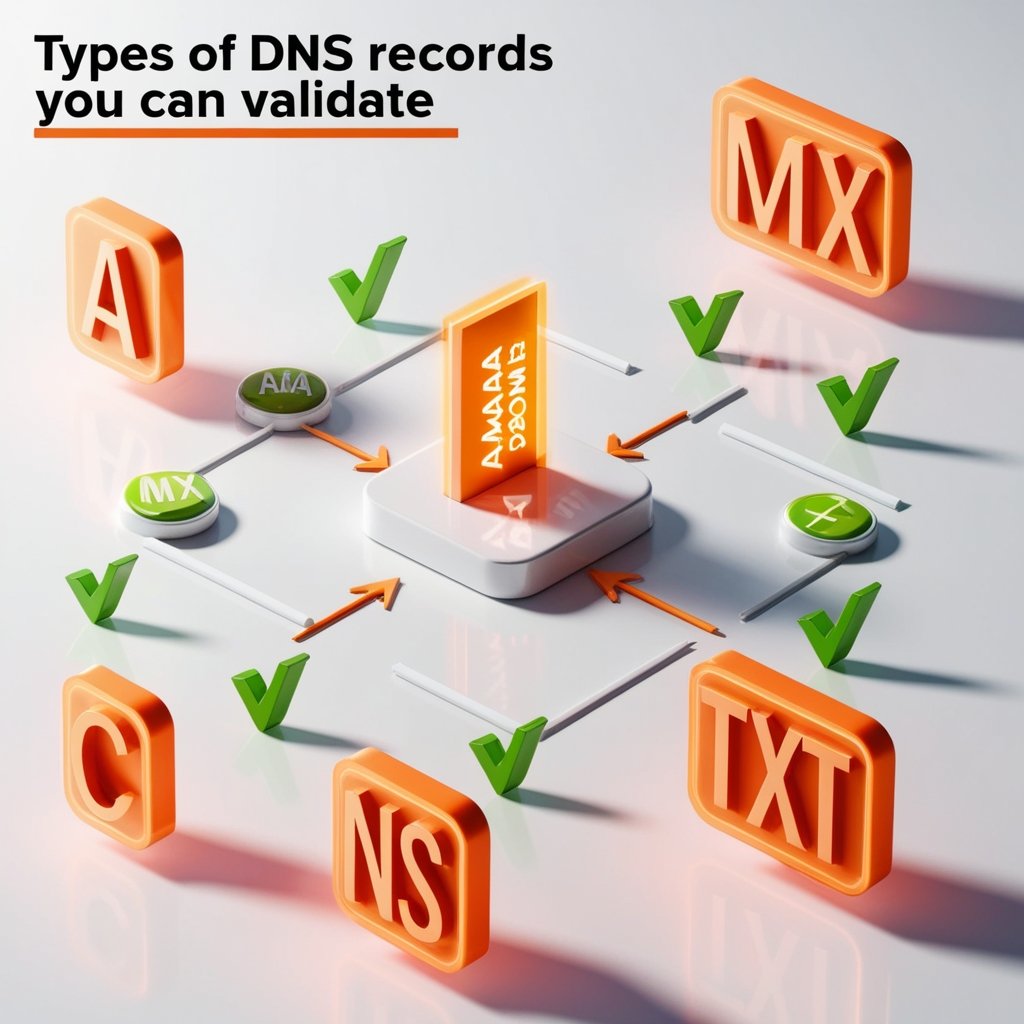
A good DNS record validation tool lets you verify almost any type of DNS entry, including:
- A Records (pointing a domain to an IP address)
- AAAA Records (IPv6)
- CNAME Records (domain-to-domain mapping)
- MX Records (email routing)
- TXT Records (SPF, DKIM, domain verification)
- NS Records (name server assignments)
- SRV Records (service definitions)
- CAA Records (certificate authority permissions)
Each type has its own syntax rules, and validation ensures everything is in the correct format.
Why DNS Record Validation Matters
DNS is the address book of the internet, it association of human readable domain name with the server locations and the service configurations. Should anything in such mapping be erroneous, even in the smallest degree, the whole chain is broken.
This is the reason why it is so important to validate DNS records:
Ensuring Accuracy Before Going Live
Whenever you set up or modify DNS records A records, CNAME, MX, TXT, or SRV you want to be certain they’re accurate. Validation checks the format and structure to identify mistakes instantly.
Catching Typographical Errors
DNS entries are sensitive. A missing dot, wrong IP digit, or extra space in a TXT record can cause failures. Validation detects these issues early.
Confirming Email Authentication
SPF, DKIM, and DMARC all rely on correctly formatted DNS entries. A validation tool tells you whether these records follow proper syntax and are readable by email providers.
Troubleshooting Site or Email Issues
If your site isn’t loading or emails aren’t being delivered, validating DNS records helps identify misconfigurations so you can fix them quickly.
Monitoring DNS Propagation
After making updates, validation tools can confirm whether the new records are appearing across global DNS servers.
How a DNS Record Validation Tool Helps
A validation tool doesn’t just check if a record exists, it also evaluates whether it makes sense. Here’s how it supports your DNS workflow:
1. Detects Incorrect Formatting
If a record doesn’t follow the global DNS standards, you’ll know immediately before deploying changes.
2. Confirms Record Visibility
The tool checks whether your DNS changes have propagated publicly and are visible worldwide.
3. Identifies Conflicting Entries
Sometimes you may add two entries that contradict each other (such as duplicate A records or multiple SPF policies). Validation highlights conflicts.
4. Helps Maintain Email Security
Without proper SPF, DKIM, and DMARC validation, emails may go to spam or fail authentication. Validation ensures your domain is trustworthy.
5. Speeds Up Troubleshooting
Instead of guessing why something isn’t working, you get actionable information from the validation results.
When Should You Use DNS Record Validation?
You should validate DNS records whenever:
- You’re launching a new website
- You’ve migrated hosting providers
- Email services stop working correctly
- You’re adding email authentication
- You suspect DNS hijacking or tampering
- You’ve made global DNS changes
- You want to check propagation status
- You’re updating security-related DNS entries
Basically, anytime you adjust DNS settings, validation is a smart move.
Final Thoughts
One of such underestimated tools is DNS record validation that ensures that everything is going in the right direction. Releasing a new project, performing some server maintenance, troubleshooting an email problem, or watching for mistakes in your network: whichever the case, checking the DNS records is a good way to find mistakes before they happen and cause downtime, as well as to make sure that your configuration is behaving as expected. DNS record validation is a way of adding clarity and confidence to your DNS records, in a digital world where even the smallest hitch in your DNS setup can bring a huge headache, this is the solution you need to ensure that your web site and email are functioning correctly.
What happens if a DNS record is invalid?
An invalid DNS record may cause website downtime, email delivery failures, or security issues depending on the type of record affected.
How long does DNS validation take?
Validation itself is instant. However, DNS propagation after making changes can take anywhere from minutes to 48 hours.
Does DNS validation show propagation progress?
Yes, many tools display whether the updated DNS records are visible across global DNS servers.
Can I validate multiple DNS records at once?
Yes, most DNS validation tools allow checking multiple entries such as SPF, MX, and A records in the same session.
Is DNS validation required for email authentication?
Absolutely. SPF, DKIM, and DMARC must be properly formatted, and validation ensures they can be interpreted by mail servers.