

Checker Tools
Text Tools
- Text separator
- Email extractor
- URL extractor
- Text size calculator
- Duplicate lines remover
- Text to speech
- IDN Punnycode converter
- Case converter
- Character counter
- List randomizer
- Reverse words
- Reverse letters
- Emojis remover
- Reverse list
- List alphabetizer
- Upside down text generator
- Old English text generator
- Cursive text generator
Developer Tools
Generator Tools
Image manipulation tools
- BMP to ICO
- ICO to JPG
- ICO to GIF
- ICO to PNG
- ICO to WEBP
- ICO to BMP
- GIF to JPG
- GIF to ICO
- GIF to PNG
- GIF to WEBP
- GIF to BMP
- HEIC to PNG
- HEIC to GIF
- HEIC to JPG
Secure Bcrypt Generator Tool
Understanding bcrypt

bcrypt is a trusted cryptographic hash function used widely for password security. Unlike simple hashing methods, bcrypt was designed specifically to make password storage secure against brute-force attacks. It achieves this through two main features: salting and an adjustable cost factor. Salting ensures that every password produces a unique output, even if two people use the same password. The cost factor determines how computationally expensive the hashing process is, making it adaptable as computing power grows.
bcrypt Hash, bcrypt Generator, and Online bcrypt Tools
When you use the bcrypt algorithm to process a password, the final output is a bcrypt hash. It has the version, cost factor, salt, and the hash string that was made. A lot of people use a bcrypt generator to make this kind of hash. You can enter a password, choose the number of rounds, and get a secure hash right away with these generators.
The popularity of online bcrypt or bcrypt online tools has made it easy for developers and students to try things out without having to install libraries. These tools work as a bcrypt hash generator and let you test password hashing right in the browser. But when it comes to production systems, it’s always best to generate hashes securely in your own backend systems instead of relying on other sites.
bcrypt Decrypt Is It Possible?
A common misconception is the idea of bcrypt decrypt. Unlike encryption, hashing is a one-way process. This means once a bcrypt hash is created, it cannot be reversed to find the original password. Instead of decryption, the verification process works by hashing the entered password again and comparing it with the stored hash. If they match, access is granted.
So, when people search for ways to “decrypt” bcrypt, what they are usually looking for is either a way to verify a password or an attempt to crack a weak password through brute force or dictionary attacks.
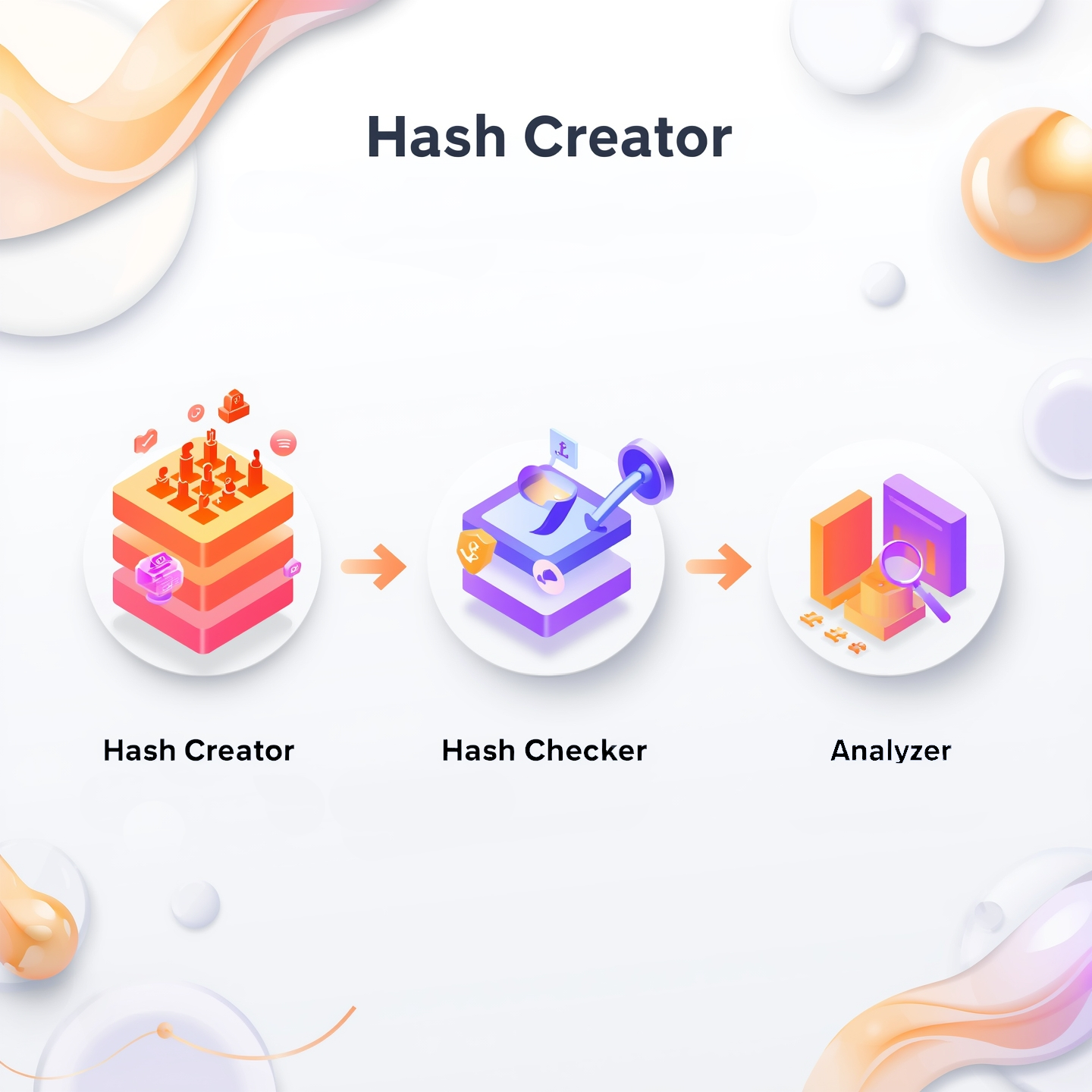
Role of Hash Creator, Hash Checker, and Hash Analyzer
To better understand bcrypt in action, it’s helpful to look at related tools:
- Hash creator: A tool or function that generates hashes from input data. bcrypt generators are a type of hash creator built for password security.
- Hash checker: This verifies whether a plaintext password matches a given hash. It is commonly used during login processes.
- Hash analyzer: A tool that inspects hash properties, such as the cost factor and salt used, to ensure best practices are being followed.
Together, these tools help maintain password security by creating, verifying, and auditing stored credentials.
Best Practices for Using bcrypt Generator and Hash Tools
- Use a sufficient cost factor – As of 2025, a cost between 12 and 14 is considered secure for most systems.
- Avoid storing plaintext passwords – Only the bcrypt hash should be stored in the database.
- Prefer local generation over online tools – Online bcrypt generators are great for testing but not ideal for production.
- Encourage strong passwords – Even the strongest hash won’t help if the password is weak.
- Rehash with higher cost factors – Over time, rehash passwords with increased costs to maintain security against advancing hardware.
Protect hash verification logic – Ensure that hash checking and analyzing is done securely within your system.
Limitations of bcrypt
While bcrypt is highly secure, it does have some limitations. One is the maximum input length, usually 72 bytes, meaning extra characters may be ignored. Another is that bcrypt is not memory-hard, which makes it less resistant to GPU or ASIC-based attacks compared to newer algorithms like Argon2. Still, its adaptability and widespread support make it one of the most popular hashing algorithms.
Trends in 2025
Right now, bcrypt is still one of the most popular ways to protect passwords. A lot of programmers still use it because it is stable and works well with a lot of programming languages. Security experts also say that more and more people are using alternatives like Argon2, which is even harder to hack. Still, bcrypt is very useful and dependable when used right.
Final Thoughts
Bcrypt is still an important part of password security in 2025. It’s important to know what bcrypt can and can’t do, whether you’re using a bcrypt generator, trying out online bcrypt tools, or checking or analyzing hashes with a hash checker or hash analyzer. Remember that bcrypt can’t be decrypted because hashing is a one-way process. Instead, focus on safe verification, strong password rules, and costs that change often. When you use these methods together, bcrypt is still a good way to keep user data safe.
What is a bcrypt hash?
bcrypt hash is the string output generated when a password is processed with the bcrypt algorithm, including its salt and cost factor.
What does a bcrypt generator do?
bcrypt generator takes your password and produces a secure hash based on the chosen cost rounds.
Can you decrypt a bcrypt hash?
No, bcrypt hashes cannot be decrypted. Verification is done by hashing the input again and comparing it with the stored hash.
What is the recommended cost factor for bcrypt?
Most security experts recommend a cost of 12 to 14 as of 2025, depending on your system’s performance.
Are online bcrypt tools safe to use?
They are safe for testing and learning, but for production environments, you should use local libraries and avoid exposing sensitive data online.
What is the purpose of a hash analyzer?
A hash analyzer helps inspect the details of a hash, such as cost and version, ensuring proper configurations are used.
Is bcrypt still secure compared to newer algorithms?
Yes, bcrypt is still secure, but newer algorithms like Argon2 offer additional protections. Choosing between them depends on your system’s needs and security goals.