
Checker Tools
Text Tools
- Text separator
- Email extractor
- URL extractor
- Text size calculator
- Duplicate lines remover
- Text to speech
- IDN Punnycode converter
- Case converter
- Character counter
- List randomizer
- Reverse words
- Reverse letters
- Emojis remover
- Reverse list
- List alphabetizer
- Upside down text generator
- Old English text generator
- Cursive text generator
Developer Tools
Generator Tools
Image manipulation tools
- BMP to ICO
- ICO to JPG
- ICO to GIF
- ICO to PNG
- ICO to WEBP
- ICO to BMP
- GIF to JPG
- GIF to ICO
- GIF to PNG
- GIF to WEBP
- GIF to BMP
- HEIC to PNG
- HEIC to GIF
- HEIC to JPG
Powerful URL Parser Tool to Instantly Decode Links
Using a URL Parser
URLs are defining the online world of web development and digital tools as the access points that link users to information. Yet did you ever feel like asking how complicated URLs are deciphered, comprehended, and handled by software? It is here that a URL parser comes to the rescue. Being a developer, SEO specialist or a digital marketer, knowing how to parse a URL can make you take web data under control, maximize your tracking, and enhance user experience.
What is a URL Parser?
The URL parser is a tool or part of a software that deconstructs the URL into individual parts like the scheme, host name, path and query string amongst others. It assists the developer to extract or alter or analyze some part of the URL without having to manipulate the whole string. Whereas, in place of a long URL that you have to manually reduce to get the parameters, a parser gets you the same at lightning speed and with accuracy.
These parsers can be built into programming languages (like Python’s urllib.parse or JavaScript’s URL object) or be available as standalone tools on the web. They’re especially useful in backend systems, analytics tracking, or debugging URL-related issues.
Parse URL Online — Quick and Easy
When you are not a coder and need a quick solution to get a URL dissected, or you simply need it quickly and don t need to learn much, a parse URL online tool is the best! With these free tools, you can copy and paste a URL and get to see every piece, down to the protocol to fragment in real time.
Benefits of using online parsers:
- No software installation required
- Free and instant analysis
- Visual breakdown of URL parts
- Useful for SEO audits, UTM parameter checks, and link optimization
Popular websites like FreeFormatter, URLParser.dev, or CyberChef offer intuitive interfaces to parse and analyze URLs with a single click.
Query String Parser — Understanding Parameters
A query string parser is a specialized tool or function that focuses on the query component of a URL everything that comes after the question mark (?). These strings often contain key-value pairs like ?id=123&type=product. A query string parser converts them into readable and editable variables.
Why it matters:
- It helps track user behavior and campaign performance (UTMs).
- Useful in debugging issues related to form submissions or API calls.
- Enables dynamic content display based on parameters.
In JavaScript, the query string can be parsed using URLSearchParams. Other languages like PHP and Python have similar functions like parse_str() and urllib.parse.parse_qs() respectively.
What Are the Parts of a URL?
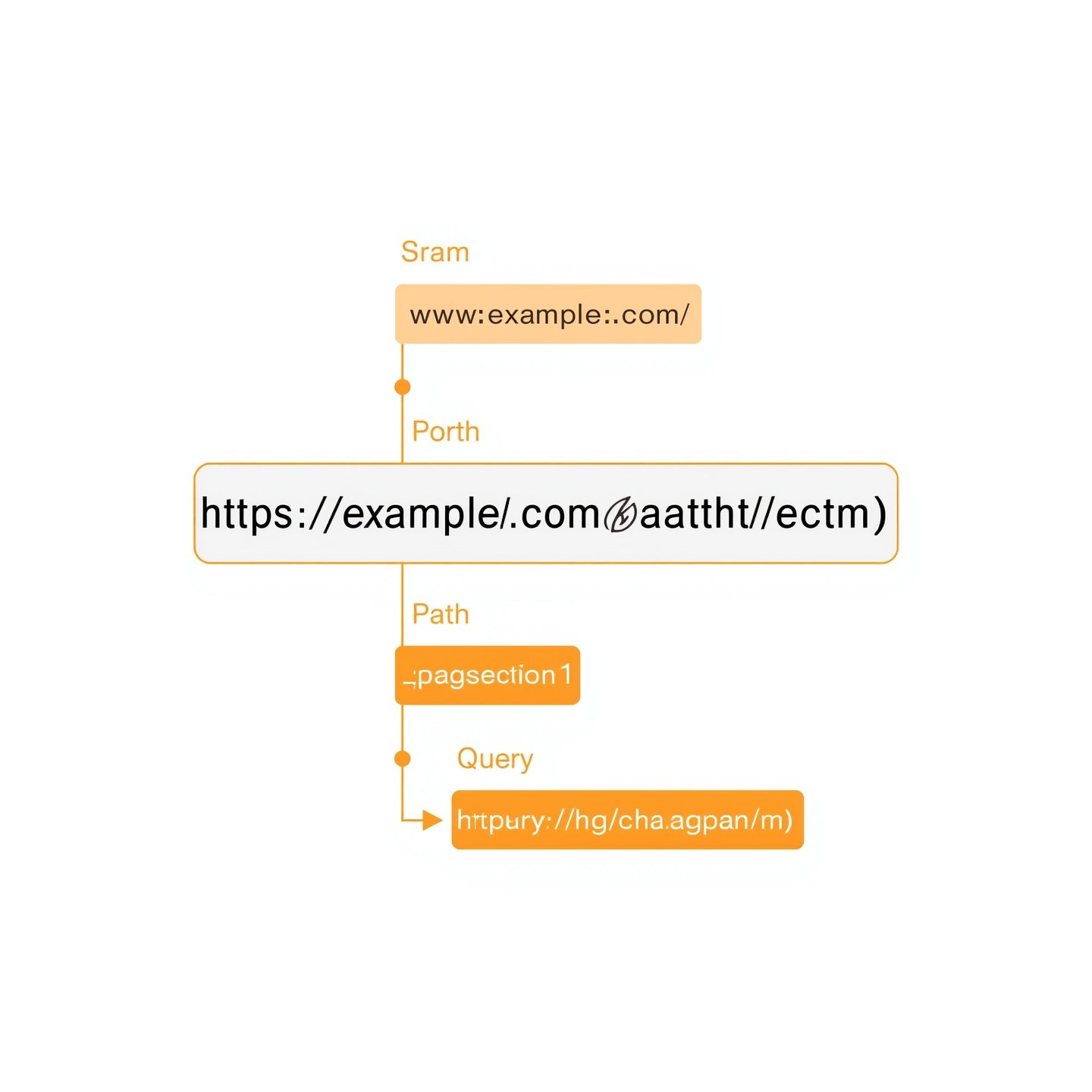
To fully understand how parsing works, you need to know what are the parts of a URL. A standard URL is more than just a website name. It is composed of several critical components:
bash
CopyEdit
https://www.example.com:8080/path/page.html?search=query#section1
Here’s a breakdown:
- Scheme (Protocol): https — defines how the data is transferred.
- Host (Domain): www.example.com — the server address.
- Port (optional): 8080 — used when accessing the server through non-standard ports.
- Path: /path/page.html — points to a specific resource on the server.
- Query string: ?search=query — includes dynamic parameters passed to the page.
- Fragment: #section1 — identifies a subsection of the content on the page.
Each of these elements can be parsed and modified using a URL parser, making the tool indispensable for tasks like redirection, security checks, and SEO optimization.
Q: What is a URL parser used for?
A URL parser is used to break down and analyze a URL into its individual components for easier processing, editing, or validation in web development and analytics.
Q: Can I parse a URL without coding knowledge?
Yes, you can use free parse URL online tools available on various websites. They provide instant results with a visual breakdown of all URL segments.
Q: What’s the difference between a URL parser and a query string parser?
A URL parser analyzes the entire URL structure, while a query string parser focuses specifically on decoding and handling the parameters in the query string section of a URL.
Q: Why is it important to understand the parts of a URL?
Knowing what are the parts of a URL helps in debugging issues, setting up redirects, enhancing SEO, and analyzing traffic sources effectively.
Q: Are query strings case-sensitive?
Yes, query strings are generally case-sensitive. For instance, ?id=123 and ?ID=123 could be treated differently by servers or APIs.
Final Thought
The process of URL parsing may appear to be a specific, technical job, but is in actuality an incredible feature that improves more than the user tracking as well as application performance. Either you are employing an inbuilt URL parser in the code or you are choosing to parse URL online by using the free utilities, the familiarity with the anatomy of a URL and the availability of utility tools such as a query string parser would make you more effective in debugging, analysing or optimising your online strategy. And after knowing what are the parts of a URL, you will be reading a link in a completely different way.